

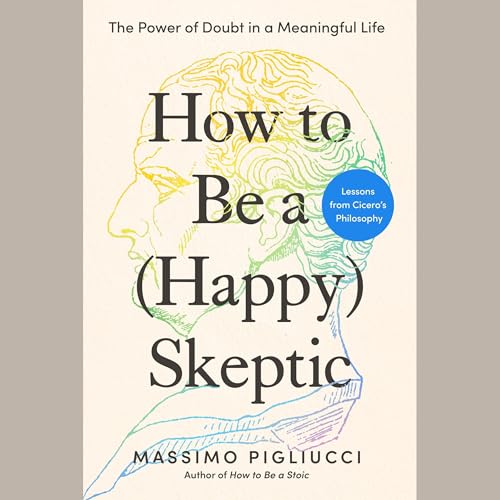
How to Be a (Happy) Skeptic
The Power of Doubt in a Meaningful Life--Lessons from Cicero's Philosophy
Falha ao colocar no Carrinho.
Tente novamente mais tarde
Falha ao adicionar à Lista de Desejos.
Tente novamente mais tarde
Falha ao remover da Lista de Desejos
Tente novamente mais tarde
Falha ao adicionar à Biblioteca
Tente outra vez
Falha ao seguir podcast
Tente outra vez
Falha ao parar de seguir podcast
Tente outra vez
Pré-venda com 30% de desconto
R$ 19,90/mês após o teste gratuito de 30 dias. Cancele a qualquer momento.
Desfrute de forma ilimitada deste título e de uma coleção de mais de 100.000 outros
Escute quando e onde quiser, inclusive offline
Sem compromisso. Cancele quando quiser.

How to Be a (Happy) Skeptic
Pré-compre agora por R$ 102,99
-
Narrado por:
Sobre este título
Throughout history it has always been true that people don’t know as much as they think they do. The ancient Greeks and Romans formulated an approach to life based on this notion. They recognized that adjusting our beliefs to the evidence while keeping in mind that we could be mistaken is the path to a just society—and a happy and meaningful life.
In How to Be A (Happy) Skeptic, philosopher Massimo Pigliucci adopts the ancient Roman public advocate, orator, statesman, and philosopher Marcus Tullius Cicero as his guide to reveal the benefits of cultivating curiosity and doubt in the pursuit of a life worth living. Cicero’s skeptical philosophy is more relevant than ever in our current age of misinformation.
Following Cicero’s life and works, Pigliucci explores the foundations for a good life, from how to formulate our values to how to nurture friendships; from being a good citizen and fighting for social justice to handling grief, pain, and even death. Skepticism as a philosophy was developed during a time of violence, social upheaval, and political turmoil. Taking a page from Cicero’s book, we, too, can adopt a practical philosophy of reason and learn to live well through uncertain times.
Ainda não há avaliações