Sustainability Stories with Scott Poynton | Inspiring Change for Our Planet Podcast Por Scott Poynton / Pioneer in Sustainability and Responsible Business capa

Sustainability Stories with Scott Poynton | Inspiring Change for Our Planet

Sustainability Stories with Scott Poynton | Inspiring Change for Our Planet

De: Scott Poynton / Pioneer in Sustainability and Responsible Business
Ouça grátis

Sobre este título

Welcome to Sustainability Stories with Scott Poynton | Inspiring Change for Our Planet. Each episode brings authentic storytelling from business leaders, climate champions, and humanitarian innovators working at the frontlines of change. Join Scott, a pioneer in sustainability and responsible business, as he explores the intersection of business, climate action, and social impact. Through powerful stories of resilience and innovation, discover how values-driven leadership and collaboration can create a more sustainable and compassionate future for people and planet.© 2019 Scott Poynton Ciências Sociais Economia
Episódios
  • The EU Deforestation Regulation (EUDR): Lessons from NDPE and a Warning from the Field
    Jan 11 2026

    In this episode, Scott reflects on the European Union Deforestation Regulation (EUDR) through the lens of three decades of work on forest protection and responsible sourcing.

    Drawing on his direct involvement in pioneering the world's first corporate No Deforestation, Explotiation and Peatland Clearance (NDPE) commitments with companies such as Nestlé, Golden Agri-Resources, Asia Pulp & Paper and Wilmar, Scott situates the EUDR as both a continuation of — and a departure from — earlier, more collaborative approaches to stopping deforestation.

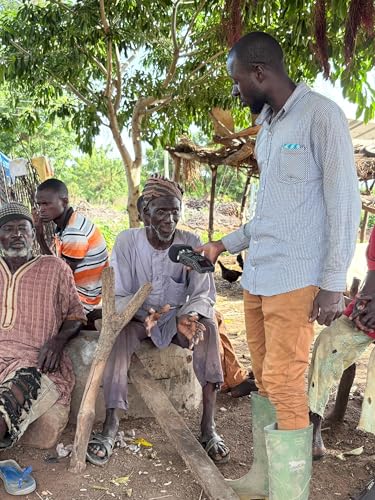
    While welcoming the ambition of the EUDR, Scott raises serious concerns about its implementation. Based on recent fieldwork in cocoa-growing communities in Cross River State, Nigeria, he describes a troubling disconnect: smallholder farmers have little or no awareness of the regulation, are continuing to clear forest to expand production, and risk losing access to European markets without receiving the support needed to improve yields on existing land.

    Scott argues that, as a blunt legal instrument, the EUDR risks producing perverse outcomes — including displacement of deforestation to non-EU markets, worsening farmer livelihoods, and potentially accelerating forest loss. He questions whether the regulation sufficiently accounts for land-use realities, customary tenure systems, and the ethical implications of restricting land-use decisions in developing countries.

    The episode concludes with a call to learn from the NDPE experience of the early 2010s: bringing companies, NGOs, governments and farmers into structured dialogue, replacing accusation with cooperation, and recognising that forest conservation is ultimately about people as much as trees.

    Keywords

    deforestation, EUDR, environmental regulation, sustainable sourcing, smallholder farmers, corporate responsibility, traceability, forest conservation, agricultural practices, NGO involvement

    Takeaways

    • The EUDR aims to prevent deforestation linked to various commodities.
    • There is significant pushback against the EUDR from industries.
    • Smallholder farmers are often unaware of regulations affecting their livelihoods.
    • Traceability systems are crucial for compliance with the EUDR.
    • Past commitments have shown the importance of engaging all stakeholders.
    • The EUDR's implementation has been delayed multiple times.
    • Companies are concerned about the lack of guidance on EUDR enforcement.
    • The regulation could inadvertently lead to increased deforestation in some areas.
    • Collaboration between NGOs and companies is essential for effective solutions.
    • The EUDR must consider the rights and needs of local farmers.

    Sound Bites

    "Did anyone ever talk to those farmers?"
    "It's about people, not just trees."
    "The EUDR has very rocky ground ahead."

    Chapters

    00:00 Introduction to Deforestation Regulation
    04:57 The European Deforestation Regulation (EUDR) Overview
    09:33 Challenges in Implementing EUDR
    14:05 Impact on Smallholder Farmers
    19:04 Lessons from Past Commitments
    24:46 The Need for Collaboration and Compromise

    Exibir mais Exibir menos
    25 minutos
  • Voices from Nakpatua: Ghanaian Farmers Embrace Biochar
    Oct 9 2025

    Summary

    In this episode of Sustainability Stories, Scott Poynton shares his experiences in Nakpatua, Ghana, where he introduces biochar to local farmers. The conversation explores the farmers' initial understanding of biochar, their observations during trials, and the potential benefits of using biochar in agriculture. The episode highlights the community's engagement and the promising future of biochar in enhancing soil health and resilience against climate change.

    Takeaways

    • The farmers in Nakpatua had little knowledge of biochar before its introduction.
    • Biochar is made from agricultural waste and helps retain water in soil.
    • Farmers are eager to learn and observe the effects of biochar on their crops.
    • Mixing biochar with manure is a favored method among farmers.
    • Farmers are not nervous about using biochar due to positive past experiences with charcoal.
    • Biochar can increase crop yields by 20-30%.
    • The longevity of biochar in soil is a significant advantage over chemical fertilizers.
    • Farmers are encouraged to experiment with biochar in their gardens and fields.
    • The community's trust in Scott Poynton's initiatives is strong due to past successes.
    • The future of biochar in Nakpatua looks promising as farmers continue to learn and adapt.

    Sound Bites

    "You do get benefits just with biochar."
    "They have no doubt at all."
    "I think it's going to be great."

    Exibir mais Exibir menos
    20 minutos
  • Starvation Season in Northern Ghana: Yams, Cassava, and the Hidden Hunger Crisis
    Sep 9 2025

    When Full Stomachs Still Mean Starvation

    Come to the field with me to explore food insecurity in northern Ghana's dry season: yams, cassava, and the struggle for nutrition, resilience, and how biochar and protein crops like Bambara create hope for farming families.

    Exibir mais Exibir menos
    6 minutos
Ainda não há avaliações